
This summary highlights key findings from the WHO/UNICEF Global Analysis and Assessment of Sanitation and Drinking-Water (GLAAS) 2025 report related to menstrual health and hygiene (MHH). …
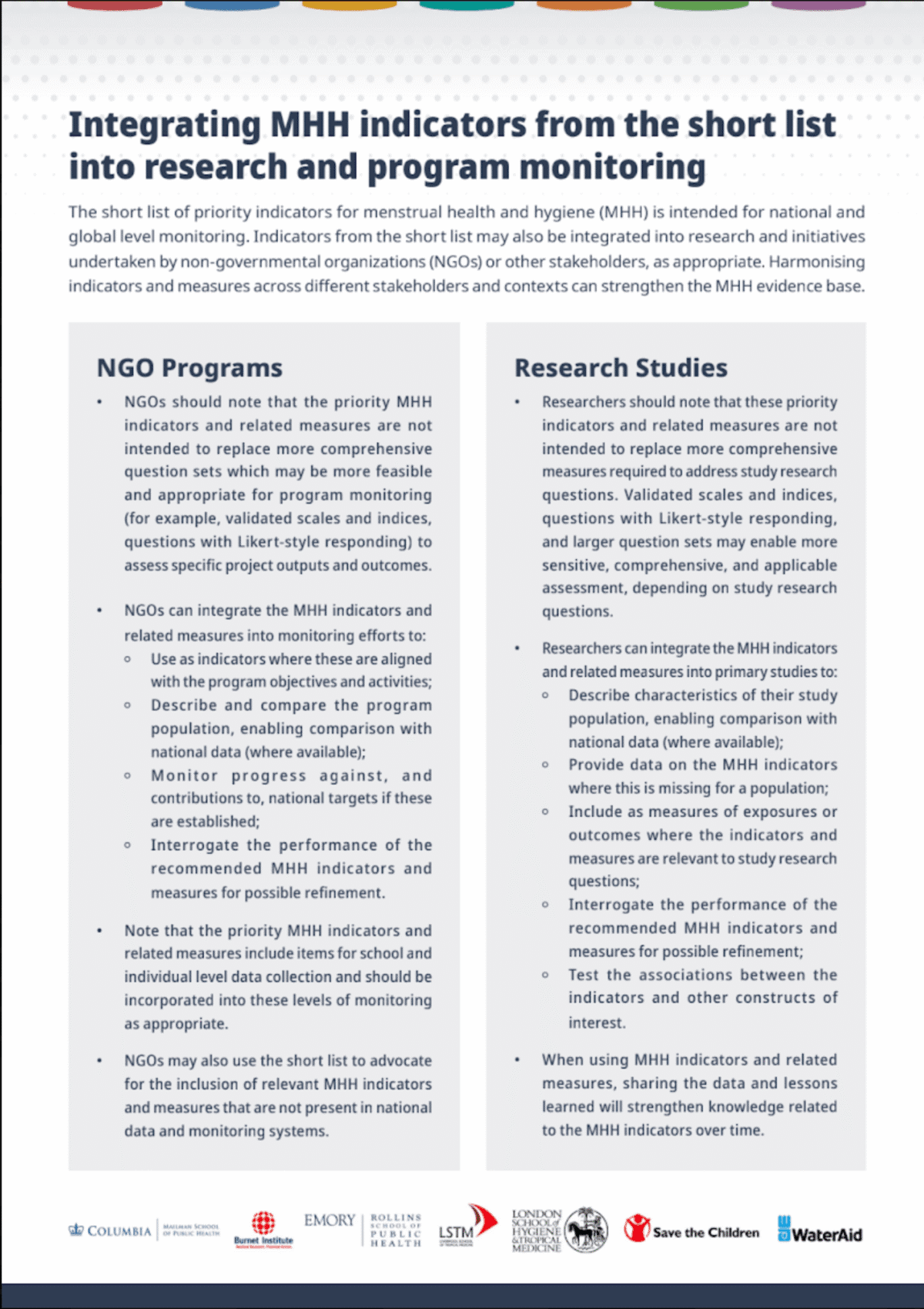
Integrating MHH indicators from the short list into research and program monitoring
This guidance note explains how the MHH Priority Indicators can be incorporated into research studies and program monitoring efforts to strengthen measurement and improve comparability across …
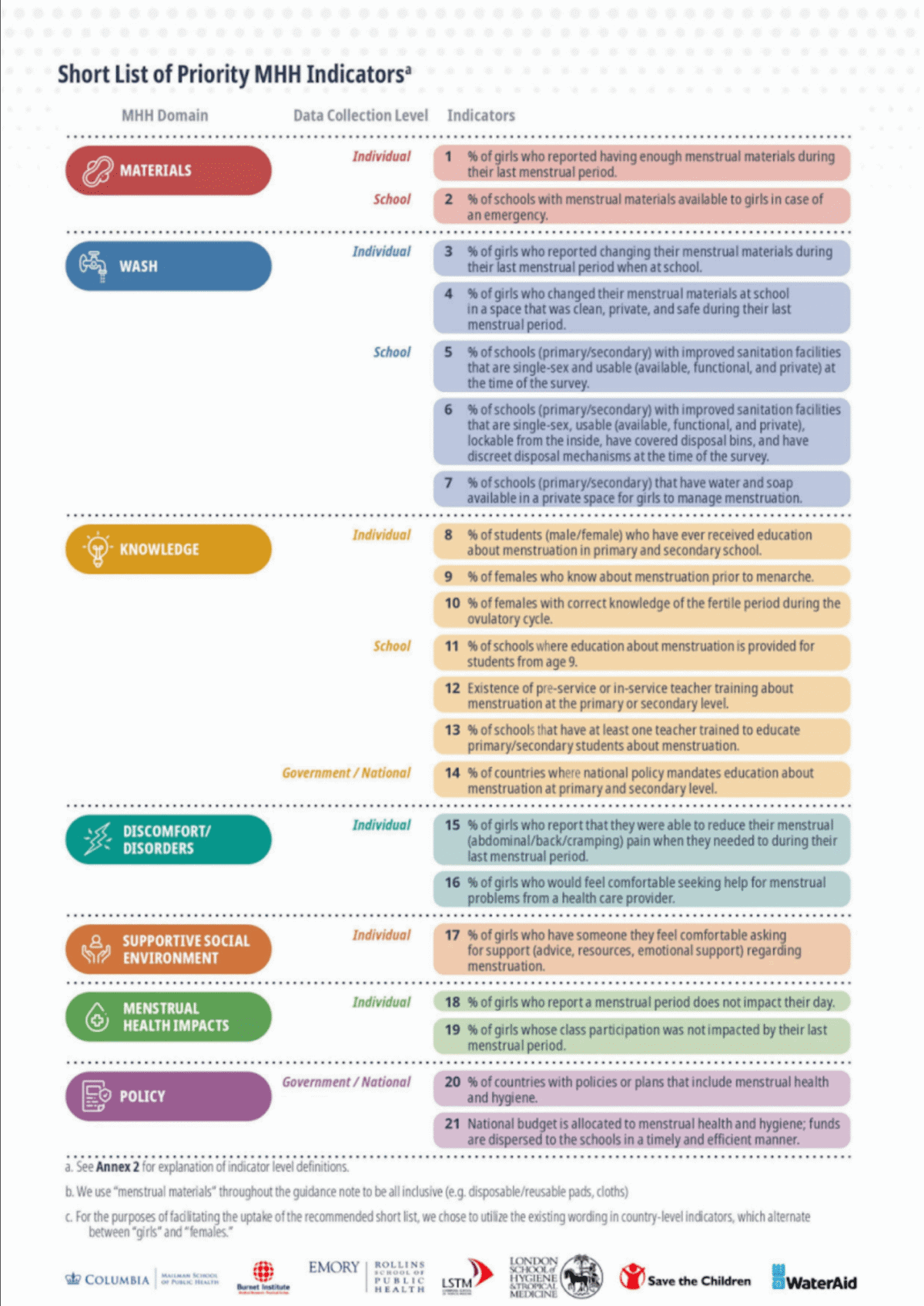
Fact sheet: Compilation of MHH Indicators
This resource compiles menstrual health and hygiene (MHH) indicators from a range of global monitoring and data collection efforts, including the Short List of Priority MHH …
Uptake of MHH Indicators and Measures_ Training on SCHOOL-LEVEL Indicators
This training resource supports enumerators and monitoring teams in collecting high-quality data on the school-level MHH Priority Indicators. It provides practical guidance on assessing menstrual health-supportive …
Uptake of MHH Indicators and Measures_ Training on INDIVIDUAL-LEVEL Indicators
This training resource supports enumerators, researchers, and monitoring teams in collecting high-quality data on the individual-level MHH Priority Indicators. Through practical guidance, discussion exercises, and examples, …
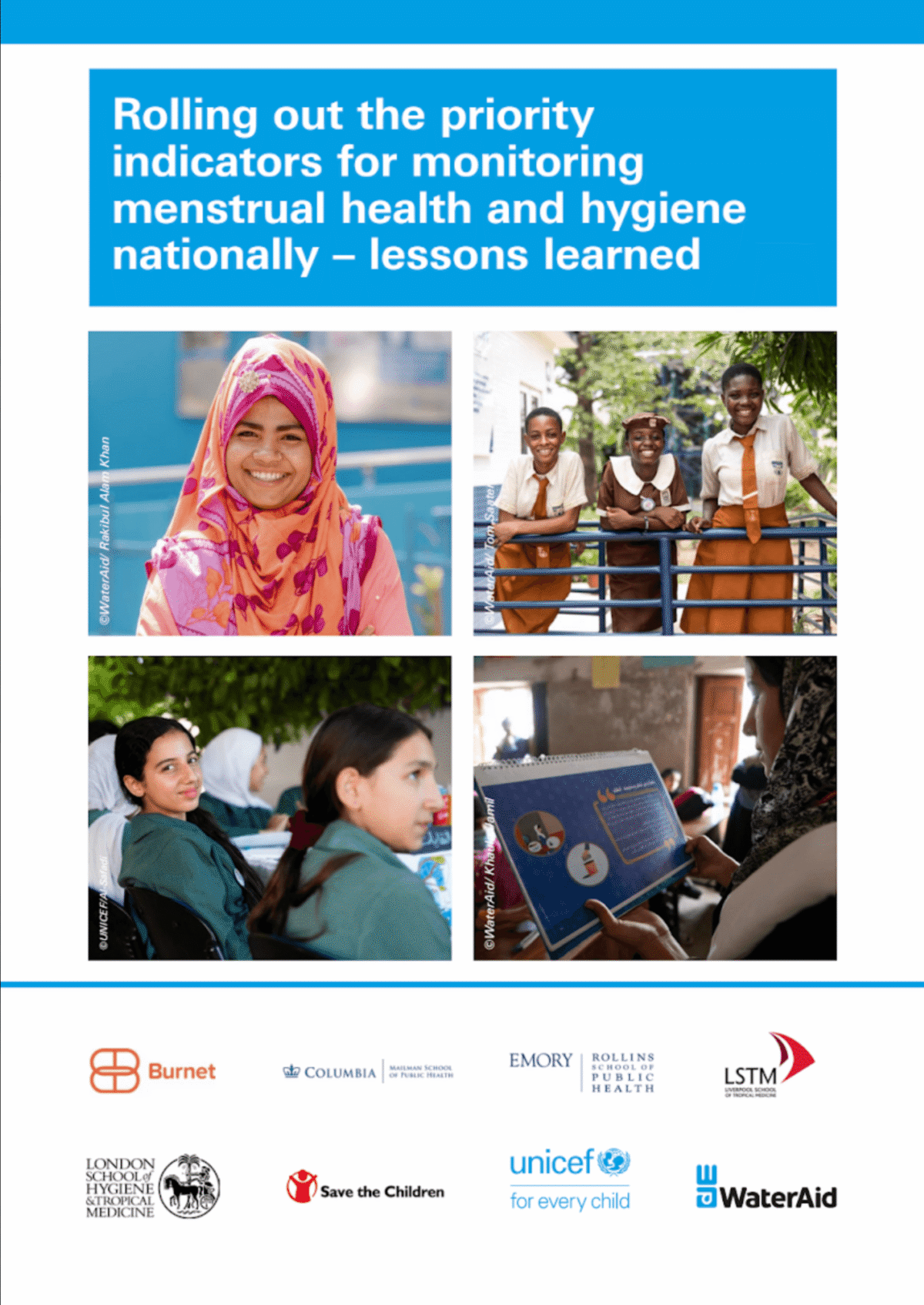
Rolling Out the Priority Indicators for Monitoring Menstrual Health and Hygiene Nationally – Lessons Learned
This brief shares the experiences of the Global MHH Monitoring Group and collaborators, including national governments, UNICEF and country stakeholders, in rolling out the indicators in …
Interactive Masterclass: Accelerating Country Level MHH Monitoring
Speakers: Thérèse Mahon, WaterAidSue Cavill, Water, Sanitation and Hygiene (WASH) Freelancer
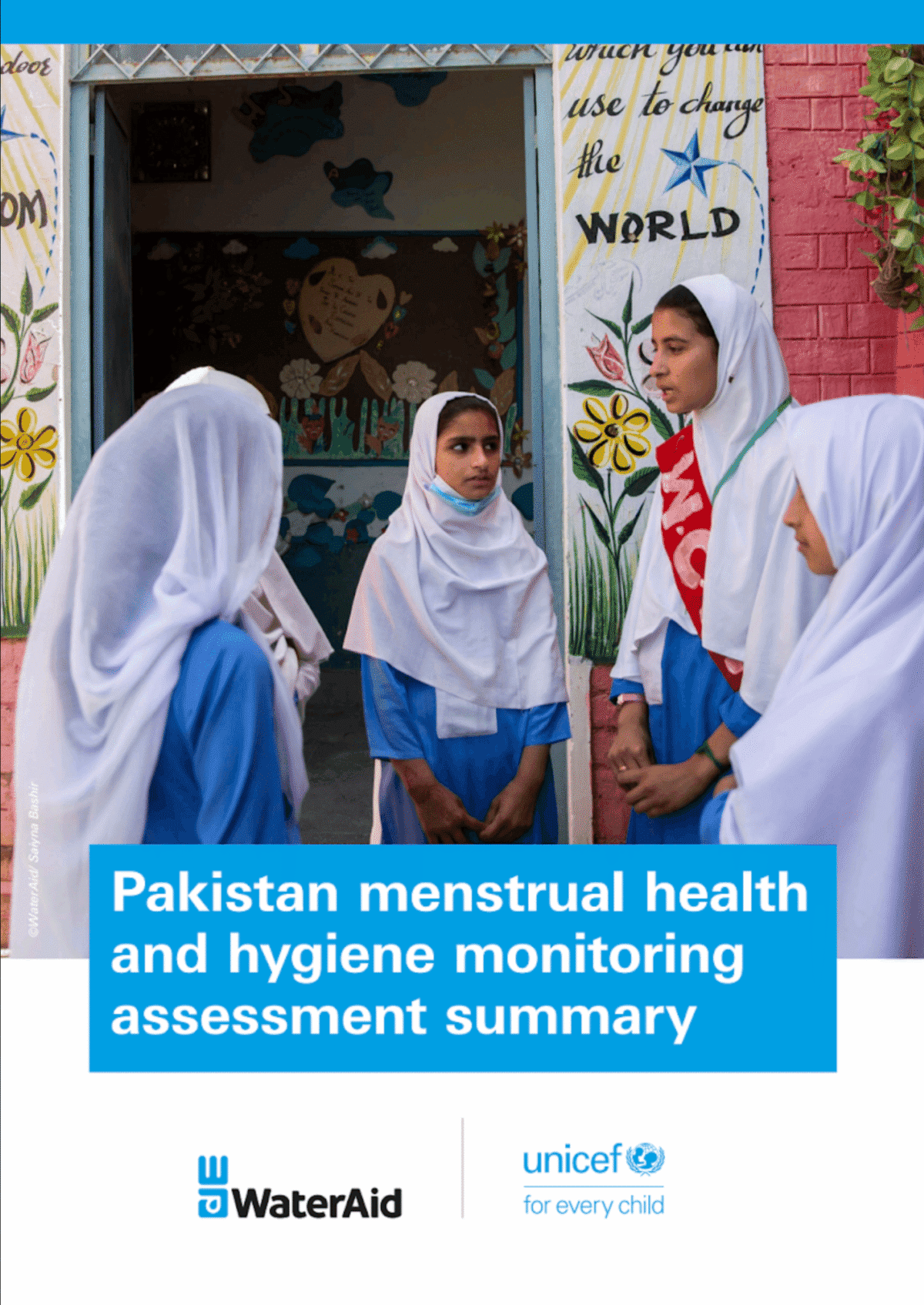
Country-Specific Menstrual Health and Hygiene Monitoring and Assessment Summaries – Pakistan
This country assessment examines the current state of menstrual health and hygiene (MHH) monitoring in Pakistan, including existing data sources, policy frameworks, and monitoring systems. It …