
Nationally Representative MHH Data
Why nationally representative MHH data matters
Nationally representative menstrual health and hygiene (MHH) data provide an essential foundation for understanding and improving menstrual health. These data help governments, researchers, advocates, and funders identify priorities, direct resources where they are needed most, and measure progress over time. By providing a clear picture of menstrual health experiences across populations and geographies, nationally representative data can inform policies and programs, reveal inequities, and support evidence-based investments that advance health, education, gender equality, and wellbeing.
The next sections highlight both the data sources where nationally representative MHH information is collected (for example, major household or school-based surveys) and the bodies that compile, report on, or help set priorities for MHH monitoring and reporting.
Multiple Indicator Cluster Survey (MICS)
The Multiple Indicator Cluster Survey (MICS), established in 1995 and coordinated globally by UNICEF, is one of the world's largest household survey programmes, generating nationally representative data on the health, education, and well-being of children, adolescents, and families. MHH was introduced as a complementary module in MICS7, representing a significant milestone in the inclusion of MHH within nationally representative data systems. The MICS7 MHH module captures key aspects of menstrual health, including menstrual materials, facilities, knowledge, discomfort and disorders, and the impacts of menstruation on daily life, providing countries with a standardized approach to monitoring menstrual health among women and adolescent girls. AiMHI works closely with the MICS team, national stakeholders, and other partners to advise on MHH indicators and synthesize MICS MHH data for use.
SDG indicators tracked through MICS
Countries and territories implementing MICS
MICS rounds completed since 1995
MHH Data Sources
Explore the major surveys and monitoring platforms that collect menstrual health data and contribute to national, regional, and global understanding of menstrual health.
The Multiple Indicator Cluster Survey (MICS) provides nationally representative data on health, education, and wellbeing, including a dedicated menstrual health and hygiene module that enables countries to monitor key aspects of menstruation among adolescent girls and women.
The Demographic and Health Surveys (DHS) program provides nationally representative data on population, health, and nutrition, including menstrual health and hygiene questions that enable countries to monitor menstrual experiences, management practices, and knowledge among women of reproductive age.
The Global Platform to Monitor School Health provides standardized data on school health policies and practices, including menstrual health indicators that help countries assess the integration of menstrual health into education systems and the availability of menstrual health supplies and support in schools.
The WHO/UNICEF Joint Monitoring Programme for Water Supply, Sanitation and Hygiene (JMP) is the leading source of international WASH monitoring data and plays a key role in advancing menstrual health monitoring through standardized indicators, country reporting, and technical guidance for data collection.
The Global Action for Measurement of Adolescent Health (GAMA) Advisory Group supports global, regional, and national adolescent health monitoring through a core set of standardized indicators, including a menstrual health indicator selected from the Priority List of MHH Indicators.
Featured Resources
GLAAS 2025 Report Summary: Key Findings on Menstrual Health & Hygiene
September 22, 2026
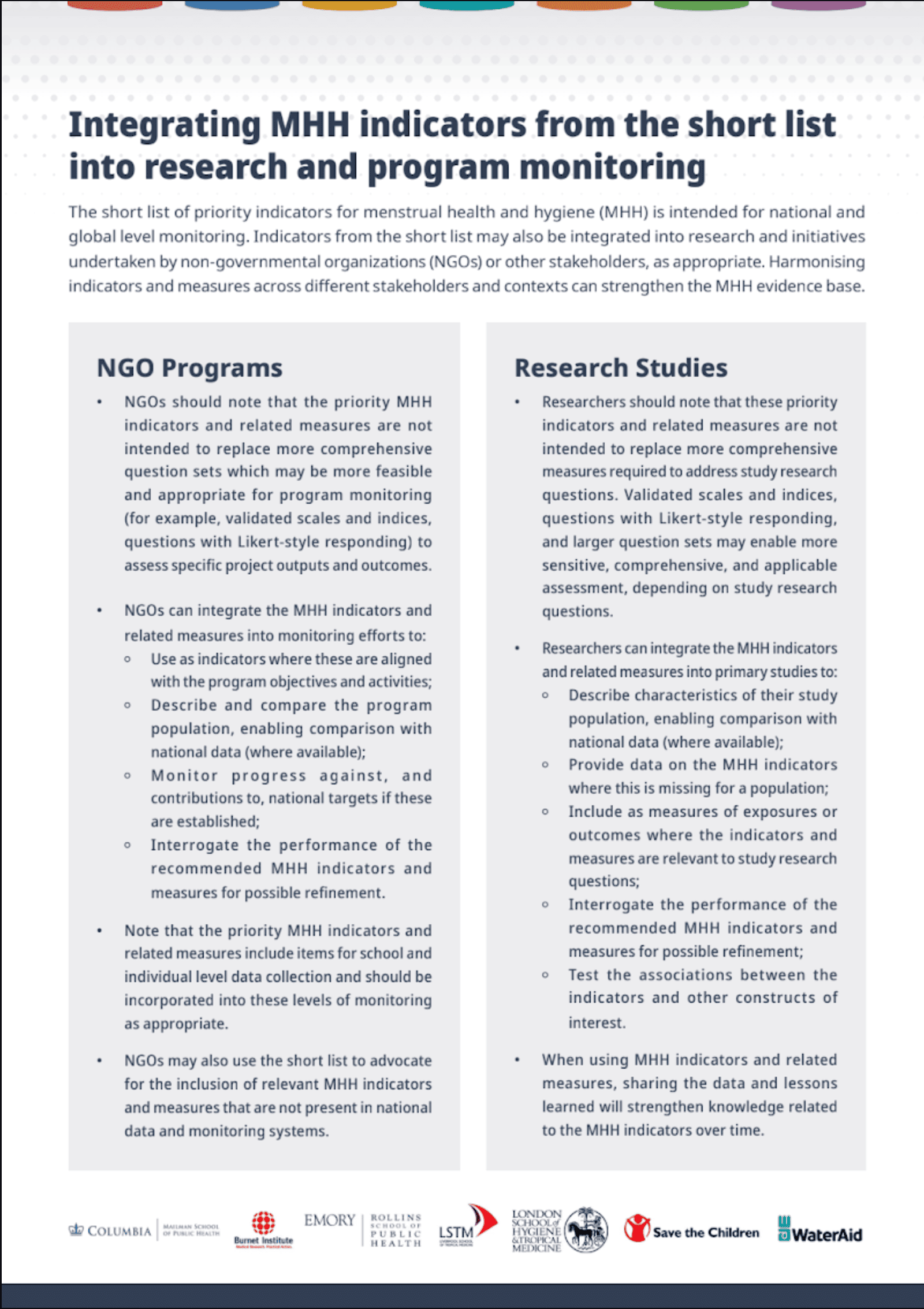
Integrating MHH indicators from the short list into research and program monitoring
September 16, 2026
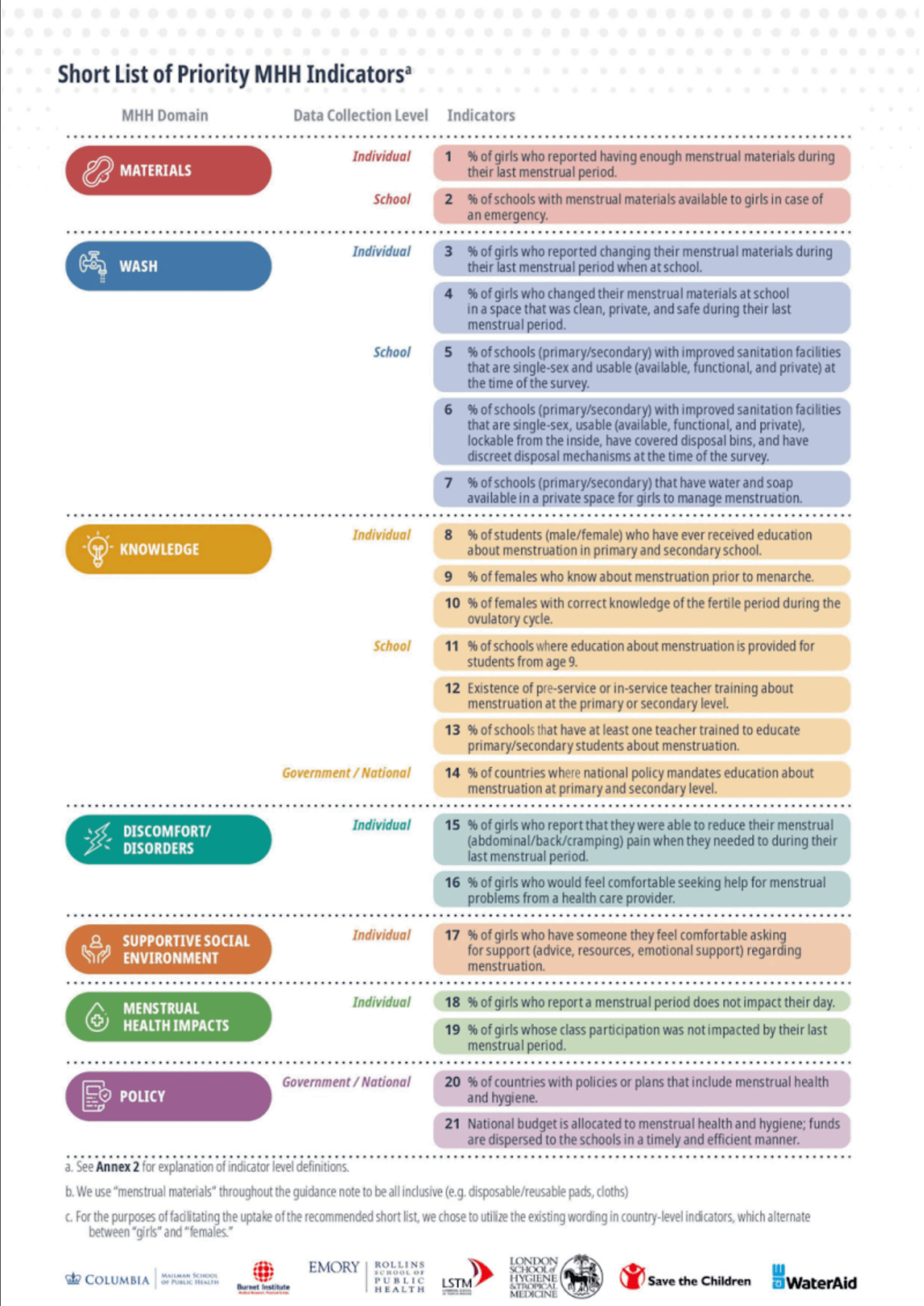
Fact sheet: Compilation of MHH Indicators
September 16, 2026